
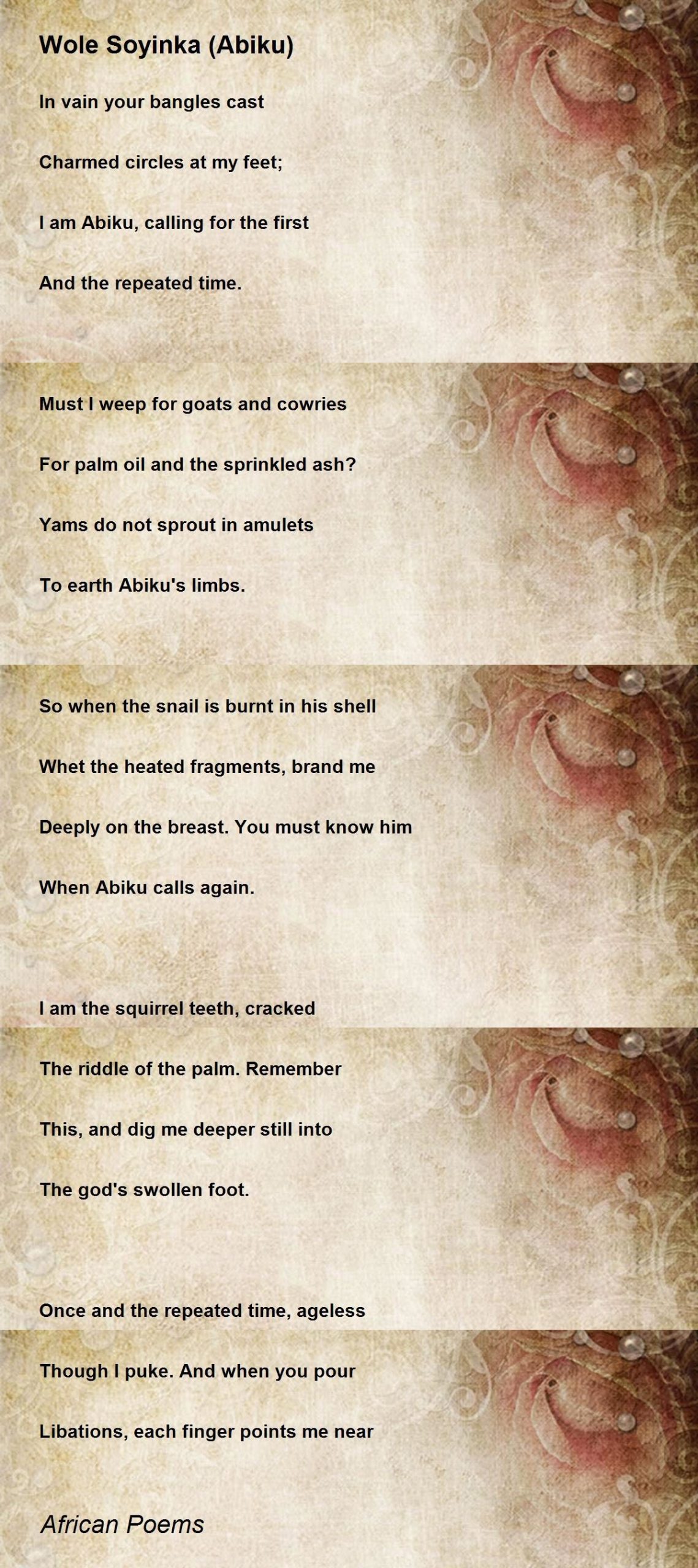
A haunting exploration of cultural beliefs and human resilience, “Abiku” by Wole Soyinka delves into the realm of spirits and mortality in Yoruba tradition. The poem vividly portrays the struggle of a mother trying to keep her abiku child from returning to the spirit world. Through evocative imagery and poignant words, Soyinka masterfully captures the eternal cycle of life and death. Join me as we unravel the profound layers of “Abiku by Wole Soyinka” and delve into the depths of existence and the supernatural.

The Mystical World of Abiku by Wole Soyinka
Introduction to Abiku
Welcome to the intriguing world of Abiku by Wole Soyinka. This captivating piece of literature delves into the mystical realm of Nigerian folklore and tradition. Abiku, a Yoruba word, refers to a spirit child who is believed to be born with the purpose of causing grief to their parents by dying young and reincarnating multiple times. In Wole Soyinka’s work, the concept of Abiku is explored with depth and complexity, offering readers a glimpse into the rich cultural heritage of Nigeria.
Exploring the Themes
One of the central themes of Abiku is the eternal struggle between life and death, fate and free will. It delves into the concept of predestination and the idea that some events in life are beyond human control. The story follows the journey of a mother who tries to protect her Abiku child from the clutches of death, only to realize that some forces are beyond her power.
Soyinka weaves a narrative that is both poignant and thought-provoking, inviting readers to ponder the mysteries of life and death. Through vivid imagery and evocative language, he paints a vivid picture of the supernatural world of Abiku, where spirits roam and destiny is a fragile thread.
The Role of Tradition
Central to the story of Abiku is the role of tradition and cultural beliefs in shaping the characters’ lives. In Nigerian culture, the concept of Abiku is deeply rooted in the traditional beliefs of the Yoruba people. Soyinka masterfully integrates these cultural elements into his narrative, offering readers a glimpse into the rich tapestry of Nigerian folklore.
The rituals and customs surrounding Abiku children are portrayed with sensitivity and reverence, highlighting the importance of tradition in understanding the characters’ motivations and actions. Through the characters’ interactions with the spirit world, readers are transported to a realm where ancient customs and modern dilemmas coexist.
Character Analysis
The characters in Abiku are richly drawn and multifaceted, each embodying a different aspect of the human experience. The mother, who is torn between her love for her child and the inevitability of fate, represents the eternal struggle between hope and despair. Her desperation to keep her Abiku child alive is a powerful testament to the depths of a mother’s love.
The Abiku child, on the other hand, embodies the enigmatic nature of fate and destiny. Born with the burden of multiple lives, the Abiku child grapples with the weight of his existence and the knowledge that his time on earth is limited. Through his interactions with the spirit world, readers are given a glimpse into the inner turmoil of a child who is caught between two worlds.
The Symbolism of Abiku
At its core, Abiku is a story of resilience and acceptance in the face of adversity. The Abiku child’s journey serves as a metaphor for the human experience, highlighting the fragility of life and the inevitability of death. The symbolism of the Abiku child resonates with readers on a profound level, urging them to contemplate the mysteries of existence and the meaning of mortality.
Soyinka’s use of symbolism is masterful, with each character and element in the story carrying deeper meaning and significance. From the symbolic rituals performed to ward off evil spirits to the haunting presence of the Abiku child himself, every detail in the narrative is laden with layers of symbolism that invite readers to delve deeper into the text.
In conclusion, Abiku by Wole Soyinka is a masterful exploration of Nigerian folklore and tradition, drawing readers into a world where spirits roam and destiny is a fragile thread. Through vivid imagery, poignant themes, and rich character development, Soyinka crafts a narrative that is both captivating and thought-provoking.
As readers journey through the mystical world of Abiku, they are invited to contemplate the eternal struggle between life and death, fate and free will. The story serves as a powerful reminder of the importance of tradition and cultural heritage in shaping our identities and understanding the mysteries of existence.
So, dive into the enchanting world of Abiku and let Wole Soyinka’s evocative prose transport you to a realm where spirits linger and destiny unfolds. Explore the depths of Nigerian folklore and tradition, and discover the timeless truths that lie within the pages of Abiku.
ABIKU (Wole Soyinka)
Frequently Asked Questions
What is the theme of “Abiku” by Wole Soyinka?
The theme of “Abiku” by Wole Soyinka revolves around the concept of fate, superstition, and the struggle between life and death. The poem explores the belief in reincarnation and the constant battle between the mortal world and the spiritual realm.
Who is the speaker in “Abiku” by Wole Soyinka?
In “Abiku” by Wole Soyinka, the speaker is a concerned parent pleading with their child, the Abiku spirit, to choose to stay in the physical world rather than returning to the spirit realm. The speaker conveys a sense of desperation and sorrow in their attempt to persuade the Abiku to remain on earth.
What literary devices are used in “Abiku” by Wole Soyinka?
“Abiku” by Wole Soyinka employs various literary devices such as imagery, symbolism, and alliteration to convey its themes and emotions. The use of vivid imagery creates a haunting and evocative atmosphere, while symbolism explores deeper meanings of life and death. Alliteration enhances the musicality of the poem and emphasizes certain key phrases for emphasis.
Final Thoughts
In “Abiku” by Wole Soyinka, the poet captures the cyclical and tormenting nature of life for a child spirit who constantly returns to the world only to leave again. Soyinka masterfully conveys the sense of longing and despair felt by the abiku through vivid imagery and poignant language. The poem delves deep into the themes of death, rebirth, and the eternal struggle between the mortal world and the spiritual realm. “Abiku by Wole Soyinka” serves as a haunting and powerful exploration of the human experience and the inevitability of fate.
About the Author