
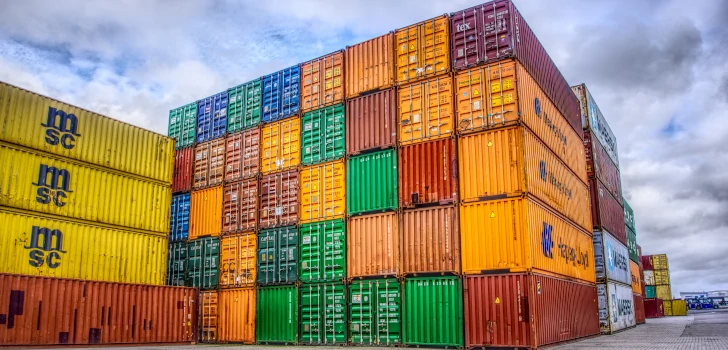
There is a version of the container story that gets told constantly. Kubernetes adoption curves. The rise of microservices. Platform engineering as a discipline. Docker costs. These are all legitimate topics and they generate a lot of good content.
What gets discussed far less often is the unglamorous, everyday problem of actually keeping containers running across a distributed fleet of machines. Not the architecture question. Not the orchestration question. The operational question: who is responsible for the fact that three hosts in your production environment are running a version of your application that was supposed to be retired six weeks ago?
The answer, in most organisations, is nobody. Or more precisely, everybody, which means nobody in practice.
This is the problem that a container management platform is designed to solve. Not in theory. Not as an aspirational state that requires months of platform engineering to reach. In practice, for teams that are already running containers and have grown past the point where informal approaches still hold together.
The Invisible Complexity of Multi-Host Container Operations
The early stages of container adoption tend to feel manageable. A handful of hosts, a small team, everyone with some mental model of what is running where. SSH access is painful but workable. Updates go out through a shared script that someone wrote eighteen months ago and everyone is too nervous to touch, but it mostly works.
Then the fleet grows. New environments get added. Edge locations come online. IoT devices enter the picture. The team expands and the shared mental model fragments. The script starts failing in ways nobody fully understands. A host gets missed during a deployment and nobody notices until a customer reports behaviour that was supposed to have been fixed two sprints ago.
This progression is not a failure of any individual on the team. It is a predictable consequence of managing distributed systems without tooling designed for the purpose. The informal approach that worked at ten hosts simply does not scale to fifty, let alone five hundred. And the costs are real: slower incident response, inconsistent deployments, engineer time spent on operational firefighting rather than product work, and a growing sense of unease every time a deployment goes out.
The Specific Failure Modes to Watch For
Teams approaching the point where informal container management breaks down tend to exhibit recognisable warning signs well before the full breakdown occurs. Understanding these patterns makes it easier to act at the right time rather than too late.
Deployment confidence declines. Engineers who were once comfortable pushing updates start asking for a second pair of eyes — not because the change is complex but because the deployment process itself feels uncertain. Which hosts did the script actually reach? Did the containers restart cleanly on all of them? Is the new version definitely running everywhere it should be?
Incident response slows down. When something breaks, the first question is often not what broke but what is actually running where. Reconstructing the current state of the fleet from deployment history, SSH logs, and individual host checks takes meaningful time — time that could be spent resolving the incident rather than understanding the starting conditions.
Knowledge becomes concentrated. One or two engineers understand how deployments actually work. When they are unavailable, the team operates with reduced capability or makes riskier decisions than they would otherwise. This is a single point of failure that most organisations recognise in theory but address too slowly in practice.
Compliance becomes difficult. Audit requirements — who deployed what, when, to which hosts — cannot easily be satisfied from SSH history and informal processes. When a compliance requirement arrives, the team discovers that their current tooling produces no useful audit trail.
What Good Container Management Actually Looks Like
The core function of a container management platform is visibility and control at fleet level. That means seeing every host, every running container, and every deployment from a single place rather than reconstructing that picture from SSH sessions and deployment logs scattered across different systems and different engineers’ memories.
Beyond visibility, the platform needs to handle deployment across the fleet. Not deployment in the sense of a CI/CD pipeline that pushes to a single target, but deployment in the sense of rolling a change out to hundreds of devices simultaneously, with the ability to target specific groups, stage the rollout, and roll back cleanly if metrics indicate a problem at any stage of the process.
Container fleet management software that does this well also handles the operational noise that comes with distributed systems: containers that crash and need restarting, devices that go offline and need to catch up when they reconnect, logs that need to be accessible without SSH access to each device individually. These are not exotic requirements. They are the operational baseline for teams managing containers at any meaningful scale, and meeting them consistently is what separates infrastructure that teams trust from infrastructure that teams are nervous about.
The Security Dimension
There is a security argument for proper fleet management tooling that often gets underweighted relative to the operational arguments, partly because the operational pain is more immediately visible.
Organisations managing containers through SSH and VPN tunnels have made a particular tradeoff: operational familiarity in exchange for a meaningful attack surface. Open ports, persistent credentials, access that is frequently broader than it needs to be because fine-grained control is hard to maintain manually at scale.
A purpose-built platform replaces this with agent-based communication that does not require inbound ports or persistent VPN connections. The operational surface shrinks substantially. Access can be scoped to specific teams and specific devices. Audit logs capture who did what and when, across every action taken in the platform. This is not a theoretical improvement — it is the kind of concrete security posture upgrade that security teams have been asking engineering teams for, often for longer than either side would care to admit.
The Case for Acting Before the Problem Becomes Critical
There is a common pattern in how organisations approach infrastructure tooling. The informal approach works, then starts showing strain, then fails in a way that is expensive enough to motivate change. The organisation addresses it reactively, under pressure, often choosing something quickly rather than choosing something well.
The better approach is to make the investment before the failure mode arrives — when there is time to evaluate options properly, migrate thoughtfully, and build the right operational practices around the new tooling without a crisis providing the deadline.
For teams currently managing containers across a handful of hosts, the investment may feel premature. For teams managing twenty or thirty hosts and starting to feel the strain, it is exactly the right moment. The warning signs described above are the signal.
Daployi is designed precisely for this transition point — built for teams that have outgrown the informal approach and need a dedicated container management platform without the complexity overhead of enterprise solutions that were not built with their use case in mind. The infrastructure problem nobody talks about enough has a practical solution. Finding it before the crisis is considerably better than arriving at it after one.
About the Author